
Retrospectives: An Interview with Alexandra Lytton Regalado Posted in: Interviews

RETROSPECTIVES:
Alexandra Lytton Regalado
In the Retrospectives interview series, readers have a chance to catch up with previous winners of the Open Competition and see the winding paths they’ve taken since receiving the award and having their books in print. How has their writing grown with time? How have their artistic persuasions and worldly perceptions shifted? Retrospectives considers the changing writerly self and the opportunities that found these poets after their big win.
What first drew you to poetry? What draws you now?
Because I grew up between two languages, Spanish and English, I was always in awe of the way poetry could convey something in such a tight, defined space and time. I never understood the abstractness of math, so there was a particular comfort in living through words—sentences, ideas, things I could experience with my five senses. I was also very timid and quiet growing up. I measured my words and thought very carefully before speaking, so language carried a particular weight for me. That feeling has never really left.
I still come to the page in the same spirit. Writing is like working out a puzzle—not therapy exactly, but a kind of exploration. Entering an undiscovered country and trying to get the lay of the land. When you reach a high point, you suddenly see the horizon and understand how you got there and what might lie beyond. Writing is the place where I feel most myself.
I remember when I was about nineteen I got lost traveling alone in a European city for the first time (before GPS). Instead of panicking, I decided to observe, write, photograph, wander. It turned into one of the best days of my life. When I finally found my way back to the hotel and called my mother to tell her, she said, very calmly, “Well, you are your own best friend, Alex.” Poetry feels like that kind of companionship with myself. A time to contemplate this life, my place in it. There is a lot of gratitude involved in that. And also a desire to track my path.
In the years since you wrote your winning manuscript, have you tackled new themes or subjects you didn’t expect? Was it a matter of confidence, or finding new skills and techniques?
I never imagined that my work would become a place people come to when they are dealing with grief or the death of a loved one. Over the years I’ve given many workshops around writing through loss, and I’ve written countless letters to friends who have lost parents.
When we are confronted with death, the next question that often follows is about faith. I grew up very Catholic—Catholic elementary school, an all-girls high school taught by Immaculate Heart nuns, Mass every Sunday, all the traditions: fish Fridays, the works . . . But after several of my elders died within a span of three years, I began to question the rigidity of those teachings. I had already moved away from strict practice over the past twenty years, but their deaths pushed me to think more deeply about what faith actually means. About how we might speak directly to God, or how many religions share a common root—how we search for that faith through ritual, ceremony, and the ways we live our daily lives.
At the same time, I’ve had a personal shift: my three children have all left the house. They’re studying or working in different countries. This distance has brought its own kind of reckoning. I wonder often what I’ve taught them, how they will move through the world. So, I spend a lot more time alone now. And I’m trying to honor that time I used to yearn for. I’m learning to enjoy it and to write about that solitude.
How has your poetic voice grown over time? How do you support this growth: reading poetry, trying new poetic forms, embracing discomfort, etc.?
More and more I’m drawn to long, lyrical poems. I’m less interested in narrative poems that arrive at neat conclusions. I prefer mystery to resolution. Resolution often feels like a construct. I’m more comfortable gesturing toward something rather than tying a bow around the end of a poem.
Lately I’ve been reading a lot of nonfiction, especially science writing about nature and biology. I love the work of Robert Macfarlane, Peter Godfrey-Smith, and physicist Marcelo Gleiser. Recently I read The Bathysphere Book by Brad Fox, about early deep-sea exploration. That book now sits on my altar of favorite books. It’s poetry through and through. What I admire in these writers is how they approach the unknown. They move through reason and scientific method, but they also leave space for wonder and humility. That, for me, is a kind of religion: experience first, then that moment where knowledge reaches its limit and something else begins.
Has your work responded to changes in culture or social conditions? What has that looked and felt like as a writer, in big or small ways?
In addition to questioning my religious upbringing after the deaths of my parents, I’ve also begun to question other kinds of power systems—political and social ones. That shift has begun to appear more in my work. At times it makes me uneasy, because I currently live in El Salvador, where freedom of speech can feel limited and uncertain.
Interestingly, around the same time I began writing fiction. Perhaps that’s not a coincidence. Fiction allows a different kind of truth-telling. It allows a blending of memory and imagination, a constructed space where certain truths can surface more clearly. Sometimes fiction is the most honest way to tell the truth.
How have your writerly habits (e.g., a daily practice, a preferred beverage at your side, music, writing analog) transformed since starting out? Is there a habit you want to develop or continue?
This may sound a little gothic, but I have a very specific ritual before I begin writing each morning. The first thing I do is open the glass doors of a cabinet in the corner of my office. Inside are shells, rocks, fossils, and small objects that loved ones have given me over the years. It’s also where we keep the urns with my parents’ ashes. I light a candle, say a prayer of thanks, and talk with them for a moment. Then I water the plants in my office, dust the bookshelves, and make coffee or tea. There is always chocolate nearby. Sometimes I prefer silence to music. I live beside a tree-lined ravine where birds gather, and when I’m on Zoom people always comment on the birdsong.
I try to reserve one day of the week as a kind of holy writing day—no meetings, no interviews, no editing other people’s work. Just writing. All for me. It takes me a while to plug into that energy, but once I’m there, I like to stay inside it. I often work until dinner, feeling almost electric, as if I’m moving inside a dream. Of course there are bad stretches. Sometimes weeks of terrible writing and torturous self-questioning. But I don’t panic anymore. I know now that this is like being lost in a new city and part of the process.
In winning the competition, you received $10,000 and publication. How did these things shape your life and path as a writer? Did this lead to other opportunities or a shift in your self-perception?
I was completely floored when I found out I had won. I wrote Relinquenda in about three months during the pandemic lockdown. I had been stranded in Miami when the borders closed in El Salvador, so I was living with my mother and grandmother. I spent those days cooking for them, walking around the neighborhood, and writing poolside in my bathing suit while my husband and three kids were an ocean away. At the time, I didn’t realize how extraordinary that period was. A few months later my grandmother died, and soon after my mother passed away as well. So, in retrospect, those quiet days together are precious.
Many of the poems in the manuscript were about my father’s cancer and his death. It was painful to write them, but the experience also felt whole—like I was fully present in my life and connected to something larger than myself. When I submitted the manuscript, it still felt raw and fresh. I honestly didn’t expect anything to come of it. I think I simply wanted the work out of my hands.
So, when it won, my first reaction was almost terror. I remember thinking: What have I done? What have I revealed? I realized how much honesty the book contained—things I might have softened if I’d spent more time revising. But eventually I came to see the manuscript differently. It was like sending a child into the world. It had its own life now. I think of it as a kind of time capsule—a version of myself at that moment in my life.
The prize money was also shocking. I never imagined poetry could contribute anything financially to my life. And Beacon’s publicity team was wonderful. The book opened doors I had never imagined: invitations to travel, teach, publish in new venues, judge contests. More than anything, winning this contest made me feel part of a wider literary community. Living in El Salvador sometimes feels like writing from a lighthouse at the edge of the world. The prize reminded me that the light reaches farther than I thought.
Have you written another book since the one published with The National Poetry Series? How is The National Poetry Series book similar or different?
I’ve recently finished a short story collection titled Drownproofing, which was a finalist for the 2025 Restless Books Immigrant Prize. The book is hybrid in many ways. It’s a series of interconnected stories that move between fiction and memory. I’m not sure if it’s exactly autofiction, but I keep thinking of Virginia Woolf’s phrase: “what we half know or half remember.” It feels like that—moments where memory and imagination blur together.
The stories explore my immigration to the United States, what it was like growing up Latina in Miami, and the experience of returning to El Salvador years later. Many of the stories move between prewar childhood, the Salvadoran civil war, and the aftermath of returning home as an adult.
The collection follows a character named Violetta Silvia and her family as they move through migration, exile, and return. Across the stories I’m interested in how private acts of survival unfold alongside political violence and historical rupture.
The themes circle around things I’ve explored in my poetry as well: resilience, inherited wounds, migration, loss of innocence, motherhood, guilt, addiction, economic disparities, sex and shame, violence and silence.
Right now, I’m submitting the manuscript to contests and beginning to explore the possibility of working with a literary agent. Entering the fiction world feels very different from poetry publishing—it’s a new landscape for me.
Who are the poets who have continued to engage you?
Among contemporary voices, I admire the image-forward boldness and adventurous spirit of poets like Aracelis Girmay, Jenny Xie, Victoria Chang, Diane Seuss, Anne Carson, Tracy K. Smith, Diana Khoi Nguyen, Natalie Diaz, and Tarfia Faizullah.
I’m also deeply moved by the sensitivity in the work of poets like Paul Tran, Chris Abani, Brian Tierney, and Leo Boix.
And then there are the poets who feel almost like permanent companions: Rilke, Plath, Woolf, Dickinson, and Robert Hass. I return to their lyric impulse the same way I return to The Smiths as a kind of fallback soundtrack.
Lately I’ve been translating contemporary Salvadoran writing, and reading a lot of manuscripts submitted for private consultations, contest entries, and student work. It’s incredibly inspiring to see how younger writers are experimenting and pushing toward original voices. Watching that search for a unique language is always energizing.
If you could talk to your younger self, the version of you before you won, what would you say to yourself? What advice would you give?
I would tell myself: be stubborn. Protect the flame inside you. You will be rejected many times. Manuscripts will keep washing back onto the shore. But each time you pick them up again, you’ll see them differently because you have changed. Distance helps. Revision helps. You begin to see the work almost through the eyes of a stranger.
What you have to protect is your intention—the impulse that made you write in the first place. But when it comes to the actual work, you have to be ruthless. You have to learn to see the manuscript the way a reader or editor might. In the end, what matters most is voice. That singular tone, that brashness, that unmistakable sound—that’s what readers are searching for.
Answer an unasked question. What’s the question, and what’s the answer?
What does it mean to write poetry from El Salvador today?
To write poetry from El Salvador today means writing from a landscape of fragility and persistence. We live in what we call the valle de las hamacas—the valley of hammocks—where earthquakes, volcanoes, and upheavals have shaped the land for millennia. This precarious geography often mirrors the cultural and political terrain writers navigate as well.
Infrastructure for literature is limited. Books sometimes circulate from someone’s backpack. There is little institutional support, and the space for free expression can feel narrow. In this climate, metaphor, myth, and coded language become essential tools—ways to speak truths that might otherwise be dangerous to say aloud.
But there is also extraordinary creativity here. Salvadoran writers continue to write, publish, translate, and build literary communities across the diaspora and the homeland. Our literature persists in the same spirit that allows life to grow from volcanic soil: stubbornly, imaginatively, and with a deep sense of collective memory.
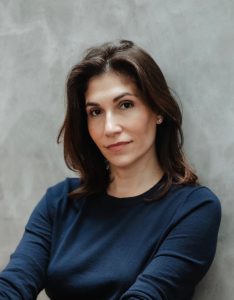
Photo credit: Lucy Tomasino