
Retrospectives: An Interview with Sasha Roque Pimentel Posted in: News, Interviews – Tags: Retrospectives, Sasha Roque Pimentel

RETROSPECTIVES:
Sasha Roque Pimentel
In the Retrospectives interview series, readers have a chance to catch up with previous winners of the Open Competition and see the winding paths they’ve taken since receiving the award and having their books in print. How has their writing grown with time? How have their artistic persuasions and worldly perceptions shifted? Retrospectives considers the changing writerly self and the opportunities that found these poets after their big win.
What first drew you to poetry? What draws you now?
When I was younger, that impulse came from the need of memory, or the need to speak to an issue of social justice. Those two things still whirl in my poetry now—they always will be part of any lyric I attempt, as the need to remember (perhaps to try to redeem, or at least try to make sense of, a thing of the past), and the need to speak to something I believe is made submerged, is central to the poetry I hope to write.
But after teaching the craft of poetry writing for 19 years to mainly graduate students writing their own books, I’ve fallen so in love with the architecture of poetry’s song. How that architecture allows a voice or narrative to leap through time and space. The freedom of all that—that something as simple as a repeated sound, or a dropped syllable, can flex time itself, can shift where a narrative might go.
Maybe that’s connected to my first impulses of poetry as an act of memory, or poetry as social act. In a poem, if you can flex the music, line, and form enough, no matter what has happened, or what continues to happen even in a pained world, anything might still be possible, accompanied by the right song. That’s freedom.
In the years since you wrote your winning manuscript, have you tackled new themes or subjects you didn’t expect? Was it a matter of confidence, or finding new skills and techniques?
This November, the International Criminal Court at The Hague, Netherlands, will begin the trial of the former president of the Philippines, Rodrigo Roa Duterte, for the crime against humanity of murder, torture, and rape. Under the guise of a rhetoric of a “war on drugs,” Duterte is alleged to have instead waged a war of terror against the Philippine poor. Human rights groups estimate that, through liquidation squads, which include the Philippine National Police and conscripted street assassins, killings of 30,000+ people were enforced in the Philippines—especially in the capital city of Manila, my birth city.
Further hurting that Philippine civilian population, the Philippines constructed (and continues to maintain) false narratives to deny individual persons—and the most economically disadvantaged of Manila’s population—continuance, and self-narrative. I am writing a kind of documentation-in-lyric of the oral histories I’ve gathered from victims and victims’ families through research trips home, as a form of resistance against historical silencing.
I am hoping to historicize in lyric too this coming international and public accounting, where covert and subjugating violences might be thrown into light, so that those hurt might be understood and heard. By forcing an accounting, a court insists that those who have been hurt had once deserved a freedom, which was wrecked. A trial insists on the sovereignty of those persons’ freedoms in the present, against what is made irrecoverable by history. I am trying to write now about how the people I’ve spoken to, who, though they were made victims by this history, are reclaiming their own belonging to their country, and to their neighborhoods.
In the past, when I’d written of the Philippines, my home country, it was always with a distance, filtered through the telescopic and humid lens of emigration. I’d never written about my native country so directly before, though I know that must seem strange for someone who advocates . . . speech.
Sometimes it takes those of us who come from other countries time to find our way home. Our own way home, in connection with, but distinct from, our elders. I needed time as a poet, and as a person, to grow up enough to brave the distances I had perceived or assumed impassable for me, and to learn I could try to traverse those distances.
How has your poetic voice grown over time? How do you support this growth: reading poetry, trying new poetic forms, embracing discomfort, etc.?
I am less and less sure of what I know.
I became a mother since winning The National Poetry Series, and I have grieved the various things one does as time unfurls. One’s poetry practice must match the joys and discomforts of experience.
Our art should strive to be as expansive and as ambiguous as our experience of the world as human beings, in however that makes sense to each of us as artists. I try to read and study, then try to write, that which I can’t or don’t yet understand. And I hope in that process to hang on to some small new thing. I hardly get there, but I try.
Has your work responded to changes in culture or social conditions? What has that looked and felt like as a writer, in big or small ways?
I am ever more of the belief that poetry dares a lyric against space and silence, laded by grief and history. That in hazarding speech, language breaks and reconstitutes itself against its own effacement. That poetry can claim, record, and grieve; is soaked in reach, and reaching. That poetry can become refuge of the smallest of spaces between the endings of lines, and their continuance.
A poem, by form, is a territory which resists boundary and erasure, and thus is the exact genre of amplitude and inclusivity, against cultural silencing, and social terror. Whether a poem speaks to a historical pain (i.e., Patricia Smith’s “Practice Standing Unleashed and Clean”) or a current violence (Yi Wei’s “Look,” Ross Gay’s “A Small, Needful Fact,” José Olivarez’s “poem where no one is deported”)—and each poem comes to its own social subject as its words find form—the poem always dares its speech.
I’ve written about my brown body, and the pains of those in bodies around me, especially where I live at the México-U.S. border, of daughters in the violences of their fathers, of women and men, and of the continued subsummation of my people and those whom I love. When I write about these things, it’s not in a great social intention, though I hope the intention might gather some care of sight. I’m just writing what I know, as a person with my specific body, in the cultures and landscapes I know.
How have your writerly habits (e.g., a daily practice, a preferred beverage at your side, music, writing analog) transformed since starting out? Is there a habit you want to develop or continue?
I have less time than I did in my 20s, of course, because I am more responsible to more people in my 40s. Some of those responsibilities are inviolable, as the way I want to love demands that. So I’m not able to wake before dawn and write in silence every morning before the landscape comes to definition as I used to—but maybe that’s temporary, because I have a four-year-old right now, whose body I refuse to slip from before he wakes. But I’ve learned—I am learning—how to find pieces of time now, bits of lyric, or thinking—and to get that down however I can, even if on a note on a phone while I listen to my son, breathing. Or as something I’ll memorize until I can transcribe it.
I am learning to be more patient, but also more hungry, to find the time to put those bits together into a more whole thing, a poem. I’m the kind of person who has always responded to the urgency of, and the pressures of, the needs of those around me first, especially as a mentor. And as a teacher in service to an academic institution.
But I am trying to schedule in writing time into my calendar now, even if only in 20-minute periods between thesis meetings—time that is scheduled and immovable as a meeting would be, to be able attend to my own writing too. I am trying to teach myself that time I give myself to write my own words matters as much as the time I give to the people to whom I am responsible.
In winning the competition, you received $10,000 and publication. How did these things shape your life and path as a writer? Did this lead to other opportunities or a shift in your self-perception?
It changed my life. From The National Poetry Series, I earned tenure at my university, became a visiting Picador guest professor in Germany, won an NEA, published in journals previously out of my reach, and I became an editor/jurist/etc. of my field for institutions I admire, like the Academy of American Poets, organizations who do the best work in contemporary U.S. arts and letters. Beacon Press—the famed Beacon Press of some of U.S literature’s most essential voices—gave me a home. I attribute that widened path always to Gregory Pardlo, who believed in me, and to The National Poetry Series. I couldn’t believe a poet I admired so like Gregory Pardlo (as a musician, technician, and human being) could see someone like me. With his belief then, I keep going as a poet, still today.
I used the prize monies to buy a home. The National Poetry Series gave me a home in my city, and in poetry. It changed my life.
I’m so grateful to still be connected to The National Poetry Series, as a judge for Beacon Press this year, and as a person who will always consider myself part of The National Poetry Series community. The National Poetry Series, and everyone who works to make it possible—director, staff, presses, judges, panelists, all, are shepherds of poets—of real people still trying to make it, as I was, when Gregory Pardlo chose to see something in my work. I know deeply, and from personal experience, winning The National Poetry Series changes the direction of a person’s life.
Have you written another book since the one published with The National Poetry Series? How is The National Poetry Series book similar or different?
I am working now on the manuscript I mentioned earlier. I notice that as . . . I know and understand less, hurt as much, but know more the silencings made of peoples’ speech, that I turn more to formal forms. Those old rhythms can hold even the freshest pains.
Who are the poets who have continued to engage you?
So many! But always when I am in deep need as a poet, I turn to the works of Patricia Smith, Major Jackson, Gregory Pardlo, Gwendolyn Brooks, and Philip Levine. I was so lucky, too, to have spent some time this summer with Kwame Dawes, Chris Abani, Mahtem Shifferaw, Safia Elhillo, Cynthia Dewi Oka, Romeo Oriogun, Joseph Millar, and Jamaica Baldwin, and I’d like to throw out my deep thanks to them, and to the universe, for teaching me great new hopes in poetry through such poets. I’d like to say maraming salamat to my countryfolk, the great singers Luisa Igloria, Patrick Rosal, Oliver de la Paz, Eugene Igloria, Rick Barot, Aimee Nezhukumatahil, Albert Abonado, Sarah Gambito, Joseph O. Legaspi, Barbara Jane Reyes, and the ates and kuyas all whom I am always studying even if in this space I lose the grace to not sing your name aloud as I should . . . And to spotlight my ever brilliant kababayan, Asa Drake, and her newest book, Beauty Talk. And there is of course, Yi Wei’s “Diary,” the book I was privileged to choose this year for The National Poetry Series for Beacon Press.
If you could talk to your younger self, the version of you before you won, what would you say to yourself? What advice would you give?
Keep going. No matter what, just keep at it. No matter what.
Answer an unasked question. What’s the question, and what’s the answer?
Do you?
Yes, I do!
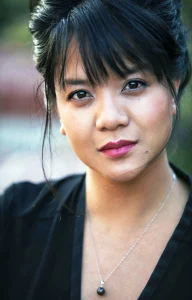
Born in the Philippines, raised in the U.S. and Saudi Arabia, Sasha Roque Pimentel is author of For Want of Water, winner of the National Poetry Series and longlisted for the PEN Open Book Award, and Insides She Swallowed, winner of the American Book Award. Her poems and essays have appeared in The New York Times, PBS News Hour, ESPN, Poetry, and American Poetry Review. She’s been a Picador Guest Professor for Literature (University of Leipzig, Germany), guest editor for Poem-a-Day (Academy of American Poets), an NEA fellow, and was this year’s judge of the National Poetry Series for Beacon Press. She’s at work on a poetry monograph about the extrajudicial killings and forced disappearances of the Philippines’s recent war on the poor. She is an Associate Professor in the bilingual (Spanish-English) Department of Creative Writing at the University of Texas at El Paso, on the border of México.