
Living Poems and Evolving Poets: A Conversation with Terrance Hayes and Patricia Smith Posted in: News, Interviews – Tags: Terrance Hayes, Patricia Smith, Interview
LIVING POEMS AND EVOLVING POETS:
A Conversation with Terrance Hayes and Patricia Smith
NPS Program Coordinator Gabriella Graceffo sat down with Terrance Hayes and Patricia Smith, both former winners and subsequent judges at The National Poetry Series, to discuss the evolution of their work, what they look for in poetry as both writers and judges, and how they see themselves as established poets in the new poetic canon.
Gabriella Graceffo (GG): First, I want to say thank you for joining me and The National Poetry Series for this interview. One of the first things that I ask poets is whether they have any writerly habits. That might be a daily practice or having a very particular drink next to you whenever you’re writing. Patricia, you said that you had just been writing before this. Do you have any writerly habits you can tell us about?
Patricia Smith (PS): I’m trying to establish a few more. The one thing that kind of scares students away is that I do ten pages every day. It doesn’t have to be ten pages of perfect poetry. It doesn’t even have to be a poem. It’s ten pages toward my art. It’s like checking in for a job. It helps me reiterate the importance of the poetry in moving sanely from day to day, that it’s not something that can be skipped.
Terrance Hayes (TH): For me, I try to put it as close to eating and thinking as I can. I’m trying to certainly catch my thinking as much as I can—that can become writing. Poems happen somewhere in that process. It might be ten pages of my name—Terrance, Terrance, Terrance, Terrance—and I would count that. But just the practice of writing every day is much like eating every day. It’s about practice.
GG: One thing I’ve noticed in your poetry is that you have clear rhythms, at least in a predominant amount of your poems. How do you chase that kind of music when you’re writing? As we’re talking about the practice element, is the music something that comes in revision, or do you listen to that music and you follow it immediately?
TH: Yeah, that’s probably in revision. I mean, I think it’s all revision. I can give you a very short answer there. I think poems are re-written; they’re not really written. Poems are re-read, not really read.
PS: Revision? [PS chuckles] I started out with the false belief that everything came out the way it came out for a reason. It has to do with getting up on stage and doing it first [as a slam poet]. I was constantly listening to how these words are hitting the air and how the audience is receiving them. The revising, if I can call it that, was all sound: That word collided with that word. It didn’t feel the way I thought. That’s harsh. And maybe I want it harsh. Maybe I want music, maybe I want harsh music, you know? But for a long time, I didn’t really even know how to revise. I would look at a poem and go, What am I looking for? Now I revise for story. You can work a little bit too hard on [the poem] until the idea you started with is buried. Is the story still there? The other thing is language. If I’ve heard it before, if it’s comfort language, even if it’s not a passage that’s incredibly important to the poem, I try to make it fresh. And the third thing is music, and I can’t really tell you where that comes from. Sometimes you want to soothe with the music; sometimes you want to disturb with the music. All I can say is I am a Motown baby. I read everything aloud. I listen for some semblance of music, realizing that’s not always going to be the same.
TH: Patricia, can I ask, do you still rely on actually getting in front of people as part of that decision? How much authority does the audience have in your decision about whether a poem is working or not?
PS: I don’t think that I have to anymore. When I am writing, I’m talking constantly. Lines said out loud over and over and over again until the next line comes. Do they work together? I’m writing through the poem, sound-wise, almost as much as I’m thinking about what the narrative is.
TH: The other thing about revision is that when I was in college, I worked on a paragraph about working in the yard with my dad for four years. It’s called “The Earth Guy.” And, you know, I wasn’t taking any [creative writing] classes; I was writing other poems for girls I liked and imitating things, but that particular thing about him—he had gone off to Korea right after that—was the thing that I worked on for the entire duration of my college career. So how does that become my pedagogy? I say to people, “You don’t want to finish it!”
PS: I have a poem about cooking cornbread in the kitchen with my father. When my father died, it was the worst thing that ever happened to me. And I said, “I’m going to write a poem, and everybody’s going to feel the hollow that my father left. They’re going to know him. They’re going to know me. I’m going to write this big, be-all, end-all poem.” Instead, I kept writing these little poems about funny things my dad would do. As I was learning things myself, the poem would undergo changes until I realized that there is no be-all, end-all poem. The way to write that huge moment was to write that small moment really well. When Terrance was talking about going through that paragraph about his dad, that was kind of the same thing with the process of that poem: it was never good enough. But it was because I had the wrong idea about what that type of poem should do, you know? And just because it’s in a book and there’s a period at the end of that last line in that last stanza, poems pulse, and they live all the time. I’m putting together this Selected thing, and I’m looking at old poems, and, yeah, part of me wanted to revise them and bring them up to date with stuff that I learned. But, also, I love how they stamp the time.
TH: But put those first poems in that debut because you might not be able to do it again! That’s what I tell kids when they’re like, “Oh, I don’t know, this is weird.” I’m like, “You might not be able to do it again, you better put in that debut.” Those usually are the most interesting poems—something about that first voice, you know? Last year [I gave] a reading at the UN. I have this poem from my first book called “Woman Walking on the Road.” It’s about a time I got in a fight with a girlfriend. I trust the poem. I hadn’t read that poem for about 15 years, so I was just dripping with sweat trying to read it to the audience. The integrity that I think I had when I wrote it, it’s still in me. But there’s no way I can write that poem again. I’ll be 55 this year, and I still don’t think I’d ever do a New and Selected because I don’t ever really want to look back. I say, “Y’all can do that when I’m dead.” But it’s almost a kind of fear about what that would mean for me in terms of this idea of just wanting always to make sure there’s something in front of me as opposed to behind me. I certainly know a thing like [“Woman Walking on the Road”] I couldn’t do again.
PS: I would never write about my mother for a long time. I didn’t have a good relationship with my mother. And it wasn’t so much that I thought, Oh, I don’t want her to see the poems, because she wasn’t interested in really reading them anyway. As I started to reveal things like that, I was concerned about people thinking differently of me. There were two things: One was my relationship [with] my mother. One was the fact that my son had been in jail before. I stayed away from those things. I stayed away, stayed away, stayed away until I could not stay away. You can’t have poetry folded into your life and then exclude some things from it. You have a choice: Is this going to see the light of day? Am I going to send it out? Is it going to be in a book? I think the evolution has a lot to do with my changing ideas about secrecy and what we hold close, and what holding close means. It doesn’t mean silence. It can’t mean silence. I don’t know if I would have reached this stage if the poetry, not only my poetry but other people’s poetry, hadn’t pulled me there would.
TH: Look, I mean, for the real poets, you can track that. The evolution is in the work because if you’re not going to grow off the page, you’re not going to grow on it either. In real poets, you see that growth, if you’re lucky enough to know them; I just think it’s there. It’s not just a pure ambition to be a good poet; you’re going to have to work on your personhood, really, to have that thing manifest itself. If you’re trying to figure out what a poet is, it’s connected to your own selfhood, and you can see that in the real poets, I think. I see it in you, Patricia.
PS: Thank you, Terrance.
TH: I mean, it’s wonderful to watch.
PS: And I see it in you, Terrance.
GG: As we’re talking about evolution, you’ve come a long way since the win with The National Poetry Series. Can you speak to what the award meant to your careers?
TH: You know, my editor, Paul [Slovak], just retired, a couple of years ago. He’s the only editor I’ve ever had. I got set up with that through The National Poetry Series. I would say it’s my whole career. If I keep talking, I’d be like, I don’t know what I’m going to do now, you know what I mean?
GG: Now you’re a bit bereft?
TH: Yeah. I don’t know what I’ll do, but I’m saying that all comes through The National Poetry Series. I tell people if you’re going to read something: the top ten for the National Book Award and the winners of the National Poetry Series. You’ll get your education every year. But I was thinking about the diversity of it over time. It’s The National Poetry Series, but what does national mean now? It’s a much more global and nuanced thing. If you look at the evolution of [the Open Competition] in the poets that are winning, it really just calls into question, What does it mean to be national? I think it means a much more interesting and nuanced thing now.
GG: I agree. What about you, Patricia?
PS: The National Poetry Series was legitimizing for me in a lot of ways. Nobody at The National Poetry Series had ever seen me on stage, so that wasn’t bolstering me in any way. I felt I must be learning something, and it gave me the courage to walk into larger poetry spaces where I was formerly uncomfortable and to not think of myself as the “lucky slam poet” who has a couple of books, but as a poet. It changed the way I thought about myself in the canon and [gave] me the confidence that I felt like there are real readers and writers behind me, and not just performers. It was a big moment.
GG: It sounds like it. On the flip side, you both have come back to judge, and I’m curious what you looked for in manuscripts as you were reviewing the finalists. Was there anything unexpected or something that really stood out to you in terms of your selection?
PS: There are very learned poems and poets, and you can see the learnedness as you’re reading: very clean, very crisp with the turns. I admire that, but it’s easy for me to walk away. I need someone riveting me to my seat. Not just innovative, but innovative in the name of the poem, innovative because that’s going to tell a story in a way that I haven’t heard it before. I’m not talking about crab poems and a reverse backside golden shovel—I’m not saying device for the sake of device. [I want to be] shaking my head and saying, “I just never looked at that aspect of that story.” I need the poet to try on all the shoes in that story, whether you think they’re a vital part or not. When those shoes get uncomfortable, you start writing.
TH: I just try to be open to it going in. I love to tell people, “I’ve probably read a million poems!” But today I said, “I’ve probably read a million poems, but I’ve probably reread half of that.” This is the thing about books: in the contest, how many things am I going to want to reread? Beyond that, I never know. I don’t think there’s any real consistency in any of the things I’ve ever picked, honestly. It’s relative to the pool, maybe relative to Monday or Tuesday, but it’s still that same idea of just wanting to reread it. Anything that’s going to draw me back, even when I’m confused by it, that’s enough in terms of the whittling process and in terms of just figuring out what’s worthwhile in the stack of books.
GG: I wonder how you see poetry impacting your life outside of writing? How do you see the world differently than someone who’s not a poet?
TH: I don’t know, because I teach. I’m teaching poems or I’m thinking about them. When am I not doing that would be a more interesting question. My dad says I shouldn’t do it so much.
[All laugh]
GG: It’s all-consuming!
TH: This is my first sabbatical in 30 years! This is all I’ve ever wanted to do. I like it too much!
PS: I think that at the beginning I thought I was writing poetry, and poetry was supposed to make things prettier. [Poems] were supposed to comfort us and give us solace, and so I was looking for stuff like that. However, I realized that poetry was supposed to reflect things the way that they were. In my life, [poetry has] made it easier for me to see the things that were hardest for me to see because it invites me in.
TH: Yeah, yeah.
PS: The other thing is teaching. I have students that are very pressured. There’s a lot of anxiety. There’s a little bit of what in the world can poetry do for me? It’s about getting them to see the poetry in that particular language that they’re using, in the things they do and what they see, and then [have them] explain it to me in a way that I can understand, that stresses the beauty or the darkness in it, finding ways to let them see how important poetry can be in their lives when they’ve been told it’s kind of a throwaway thing. Seeing everything reflected through those students, I can’t see how poetry can’t be there, you know? And it’s so much fun to wake up and have the slate be clean. Slate’s clean every day! I can do something new. I can write a new poem. I can read a new poem. I could meet a new poet. I can go online and hear this poet read. I’m in it.
TH: I mean, we hope we’re creating the best possible world with our peers. That’s how it works.
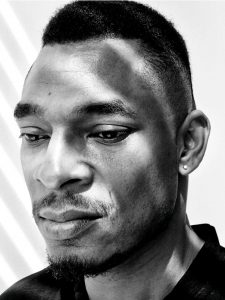
Photo by Kathy Ryan
Terrance Hayes is a 2014 MacArthur Fellow. He was born in Columbia, South Carolina in 1971, and educated at Coker College where he studied painting and English and was an Academic All-American on the men’s basketball team. After receiving his MFA from the University of Pittsburgh in 1997, he taught in southern Japan, Columbus, Ohio, and New Orleans, Louisiana. Hayes taught at Carnegie Mellon University and the University of Pittsburgh before becoming a dsitinguished Silver Professor of English at New York University.
Hayes served as the 2017-2018 poetry editor for New York Times Magazine. He was guest editor of The Best American Poetry 2014 (Scribner, 2014), the preeminent annual anthology of contemporary American poetry. His poems have appeared in ten editions of the series.
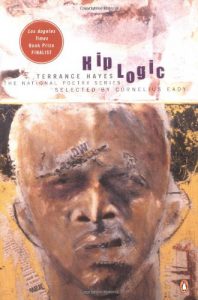
His first book, Muscular Music, won a Whiting Writers Award and the Kate Tufts Discovery Award. His second book, Hip Logic (Penguin 2002), was a National Poetry Series selection and a finalist for both the Los Angeles Time Book Award and the James Laughlin Award from the Academy of American Poets. Wind In a Box (Penguin 2006), a Hurston-Wright Legacy Award finalist, was named one of the best books of 2006 by Publishers Weekly. How to Be Drawn received the 2016 NAACP Image Award for Poetry. Lighthead, was winner of the 2010 National Book Award.
His sixth poetry collection, American Sonnets for My Past And Future Assassin (Penguin, 2018), was a finalist for the National Book Award, the National Book Critics Circle Award, the TS Eliot Prize, the Brooklyn Public Library’s Literary Prize for Fiction & Poetry, the LA Times Book Award, the Hurston/Wright Legacy Award, and the Kingsley Tufts Award.
His essay collection, To Float In The Space Between: Drawings and Essays in Conversation with Etheridge Knight (Wave, 2018) was a finalist for the National Book Critics Circle Award and winner of the Poetry Foundation’s 2019 Pegasus Award for Poetry Criticism.
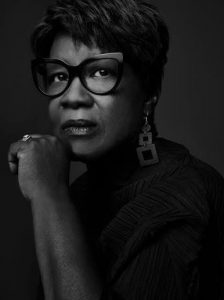
Photo by Sandro Miller
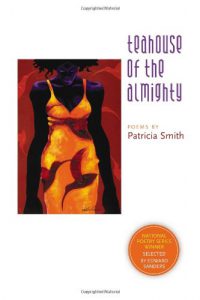
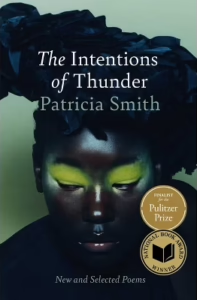
Patricia Smith is the author of ten books of poetry, including The Intentions of Thunder: New and Selected Poems (Scribner 2025), winner of the 2025 National Book Award for Poetry, finalist for the 2026 Pulitzer Prize, andwinner of the 2026 NAACP Image Award for Poetry; Unshuttered; Incendiary Art, winner of the 2018 Kingsley Tufts Poetry Award, the 2017 Los Angeles Times Book Prize and the 2018 NAACP Image Award, and finalist for the 2018 Pulitzer Prize; Shoulda Been Jimi Savannah, winner of the Lenore Marshall Prize from the Academy of American Poets; Blood Dazzler, a National Book Award finalist; and Gotta Go, Gotta Flow, a collaboration with award-winning Chicago photographer Michael Abramson. Her other books include the poetry volumes Teahouse of the Almighty, Close to Death, Big Towns Big Talk, Life According to Motown; the children’s book Janna and the Kings; and the history Africans in America, a companion book to the award-winning PBS series.
Her work has appeared in The New Yorker, Poetry, The Paris Review, The Baffler, BOMB, The Washington Post, The New York Times, Tin House and in Best American Poetry and Best American Essays. She co-edited The Golden Shovel Anthology—New Poems Honoring Gwendolyn Brooks and edited the crime fiction anthology Staten Island Noir. Her contribution to that volume, “When They Are Done With Us,” was awarded the Robert L. Fish Award for best debut short story from the Mystery Writers of America and was published in Best American Mystery Stories.
Smith is a recipient of the Ruth Lilly Poetry Prize for Lifetime Achievement from the Poetry Foundation, an inductee of the American Academy of Arts & Sciences, and Academy of American Poets Chancellor and a member of the Chicago Literary Hall of Fame. She is also a Guggenheim fellow, a Civitellian, a finalist for the Neustadt Prize, and a four-time individual champion of the National Poetry Slam, the most successful poet in the competition’s history.
Smith is a professor in the Lewis Center for the Arts at Princeton University and a former Distinguished Professor for the City University of New York.