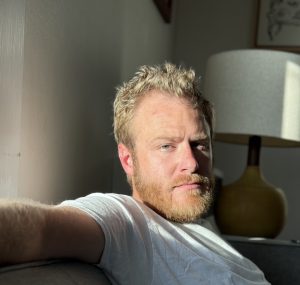
Retrospectives: An Interview with Will Brewer Posted in: Interviews

RETROSPECTIVES:
Will Brewer
In the Retrospectives interview series, readers have a chance to catch up with previous winners of the Open Competition and see the winding paths they’ve taken since receiving the award and having their books in print. How has their writing grown with time? How have their artistic persuasions and worldly perceptions shifted? Retrospectives considers the changing writerly self and the opportunities that found these poets after their big win.
What first drew you to poetry? What draws you now?
It was an accident. I was a college freshman trying to get into a fiction workshop but all the slots were full. I had to take poetry anyway as a major requirement, so I went for it. Right away I recognized how image plays a huge part in poems (at least the poems I like). Because I was a painter, I knew how to think through images, so the form suddenly felt possible. Now I’m drawn by the mystery . . .
In the years since you wrote your winning manuscript, have you tackled new themes or subjects you didn’t expect? Was it a matter of confidence, or finding new skills and techniques?
My book was picked up for the NPS a few days before I moved to California to start the Stegner. When I arrived, I had to start writing new poems every week for workshop. I was in a very new place, in this new group of very talented writers, with no clue what I wanted to do next. I went for broke and wrote whatever emerged. I didn’t have a plan. Because the Stegner gifts you so much time, I read a lot, wrote lots of bad poems, walked, and slowly, with the help of teachers, friends, and lots of revision, discovered the new poems, and a new book, one page at a time.
How has your poetic voice grown over time? How do you support this growth: reading poetry, trying new poetic forms, embracing discomfort, etc.?
After I finished writing my second book, I stopped writing poems for maybe three years? I had to deprogram everything I knew about poetry and return to beginner’s mind. I wanted to write instinctually. Now I don’t try to make poems happen. I read a lot. I meditate. I wait. When something shows up, I try to get out of the way and let it become the clearest expression of itself. It should feel like a sudden occurrence on the page.
Has your work responded to changes in culture or social conditions? What has that looked and felt like as a writer, in big or small ways?
Life happens and the work changes. Currently my work seems interested in how the internet and algorithms ruined most things over the last 10-12 years, including most of literary culture. We’ve got enough vantage now to see that even poetry wasn’t as immune to algorithmic influence as many suspected.
How have your writerly habits (e.g., a daily practice, a preferred beverage at your side, music, writing analog) transformed since starting out? Is there a habit you want to develop or continue?
I write fiction in the morning. I write poems when they arrive. I never write at night anymore. I print out each draft and edit by hand. Lather, rinse, repeat.
In winning the competition, you received $10,000 and publication. How did these things shape your life and path as a writer? Did this lead to other opportunities or a shift in your self-perception?
The NPS changed my life. It was a colossal vote of confidence. It placed me with Milkweed Editions, which I adore. I’ve met so many incredible people and artists because of the book. Writing never gets easier. The uncertainty and doubt are always there—no book can change that—but you learn to use these emotions to stay rigorous with your work.
Have you written another book since the one published with The National Poetry Series? How is The National Poetry Series book similar or different?
In 2022, I published a novel, The Red Arrow. In February 2026, I published Nocturama, a new book of poems. They’re both very different than I Know Your Kind but threads carry from one book to the next: West Virginia, depression, altered states of consciousness, love, finding a new understanding of consciousness and the mind, the mystical . . .
Who are the poets who have continued to engage you?
Louise Gluck. Philip Larkin. Carl Phillips. My friends.
If you could talk to your younger self, the version of you before you won, what would you say to yourself? What advice would you give?
I wouldn’t say anything. At least not about writing. He had to figure out how to make the work only he could make.
Answer an unasked question. What’s the question, and what’s the answer?
What’s the best book about poetry you’ve read that’s not explicitly about poetry?
Wabi-Sabi by Leonard Koren.