
Retrospectives: An Interview with W. J. Herbert Posted in: News, Interviews – Tags: Retrospectives, W.J. Herbert

RETROSPECTIVES:
W. J. Herbert
In the Retrospectives interview series, readers have a chance to catch up with previous winners of the Open Competition and see the winding paths they’ve taken since receiving the award and having their books in print. How has their writing grown with time? How have their artistic persuasions and worldly perceptions shifted? Retrospectives considers the changing writerly self and the opportunities that found these poets after their big win.
What first drew you to poetry? What draws you now?
This morning, I read a poem that took my breath away: its ambiguities and resonances amplified by layer after layer of complexity until it flamed itself out. I was in awe of the poet. The first time this happened decades ago, I was a musician working to interpret a composer’s vision. Suddenly, it seemed possible to become a composer myself, creating in a medium I’d always loved: language.
In the years since you wrote your winning manuscript, have you tackled new themes or subjects you didn’t expect? Was it a matter of confidence, or finding new skills and techniques?
I’m a desert rat. I grew up appreciating the Sonoran’s unique ecology and threatened species. In 2016, after Trump began dismantling the hard-won victories environmental activists and policymakers had fought for, many of us developed a climate PTSD. In addition, a temporary health scare motivated me to consider my own mortality. I began writing my first collection, Dear Specimen, in that fraught moment. In the book’s final pages, its speaker no longer separates her life, or her death, from our planet’s web of vibrant species. Ecological concern and familial relationships are themes I still pursue.
How has your poetic voice grown over time? How do you support this growth: reading poetry, trying new poetic forms, embracing discomfort, etc.?
I love going to the University of Arizona Poetry Center in Tucson. It’s a great luxury. I linger in its light-filled, glass-walled library as long as I possibly can, reading everyone’s new work. It’s a poetic voice orgy.
Has your work responded to changes in culture or social conditions? What has that looked and felt like as a writer, in big or small ways?
Many communities who have few resources to prepare for, or mitigate, our climate catastrophes have nothing to do with their creation. Despite advances in affordable wind and solar, the governments and corporations of richer countries still hawk fossil fuels. Because it’s difficult not to become discouraged, Dear Specimen and my recent work contain poems meant to console. I hope others find them meaningful, especially those working hard to shift the paradigm.
How have your writerly habits (e.g., a daily practice, a preferred beverage at your side, music, writing analog) transformed since starting out? Is there a habit you want to develop or continue?
Before I start writing, I listen to one of the Temple Sounds guided chakra meditations. Then I meditate and read poems from a poet’s new collection. Once I start writing, I’m usually open to a flow state like the one described by psychologist Mihaly Csikszentmihalyi. If I’m writing in a challenging environment, I plug into a recording of ocean waves. Like many, I write first drafts by hand. (As an aside, I’m grateful that my training as a musician yoked me to a habit of daily practice.)
In winning the competition, you received $10,000 and publication. How did these things shape your life and path as a writer? Did this lead to other opportunities or a shift in your self-perception?
Though I read collections that astounded me, I didn’t reach out to compliment poets until after I became a series winner. Now when I do, people often tell me how much the appreciation means to them, though I don’t know most of them and they don’t know me. The NPS recognition also encouraged me to more fully participate in our community as a reviewer, interviewer, screener, and coach. Though I believe luck plays a large part in connecting a manuscript with a judge who wants to share the collection’s craft and content with others, I am deeply grateful to the NPS and to Kwame Dawes, in particular, for selecting Dear Specimen.
Have you written another book since the one published with The National Poetry Series? How is The National Poetry Series book similar or different?
I’ve nearly finished two new manuscripts. The first is deeply complex and has taken five years to complete. Like Dear Specimen, it centers on a beloved species threatened with extinction and a speaker filled with wonder and grief. The newer manuscript, which arrived like a bolt of lightning, returns to Dear Specimen’s epistolary form, with poems which are philosophical, political, chimerical and passionate, all of them addressed to . . . well, I’ll tell you once it’s finished!
Who are the poets who have continued to engage you?
Toooooo many wonderful poets to mention! But stranded once with only one paperback on a long trip to a country where few, if any, poetry books were available in English, I found that even though I wasn’t initially drawn to it, rereading the collection again and, again, allowed me to appreciate its complexities. At the University of Arizona Poetry Center, I read everyone’s chapbooks and full-length collections with the same diligent interest.
If you could talk to your younger self, the version of you before you won, what would you say to yourself? What advice would you give?
1. Try not to excessively admire others at the expense of your own vision. It’s difficult to take your bearings on someone else’s ship.
2. As a poet who hasn’t published a collection, appreciate the freedom you may feel to write without the pressure of your own and others’ expectations. It can be difficult to return to that liminal state.
3. Your contemporaries are your teachers: read their work not only in their collections, but also in journals shepherded by dedicated editors and staff.
Answer an unasked question. What’s the question, and what’s the answer?
In what ways has receiving this accolade made you more grateful?
I was immediately grateful to those who contribute to the National Poetry Series in a myriad of ways: from funders, board, and staff to screeners, judges, and presses. I was, and still am, grateful to those who spend time with Dear Specimen: reviewers, interviewers, endorsers, readers, and friends. I’m grateful to the supporters and curators of the museum collections which allow us to nurture our curiosity, and to those who help to preserve the wild places that inspire us. Finally, I feel personally grateful to those who helped me to develop as a poet: mentors, teachers, friends, family. To those who respond to my notes of admiration, thank you! I hope people will continue to reach out to me for advice and community.
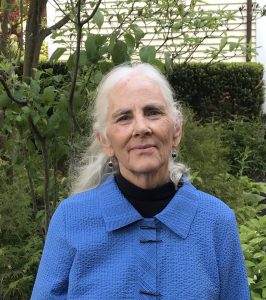
W. J. Herbert’s debut collection, Dear Specimen, (Beacon Press, 2021) was selected by Kwame Dawes as a winner of the 2020 National Poetry Series and awarded a 2022 Maine Book Award for Poetry. Awarded the 2022 Arts & Letters/Rumi Prize for Poetry, her work also appears, or is forthcoming, in The Atlantic, Best American Poetry, The Georgia Review, The Hudson Review, The Southern Review, and elsewhere. Herbert served for seven years as coordinator of the bimonthly poetry series and annual poetry competition offered by dA Center for the Arts in Pomona, California. She was born in Cleveland, Ohio and raised in Southern California where she earned a bachelor’s in studio art and a master’s in flute performance. She lives in Portland, Maine on Wabanaki homelands.