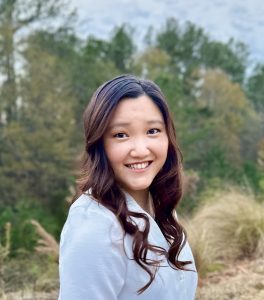
Retrospectives: An Interview with Su Cho Posted in: Interviews

RETROSPECTIVES:
Su Cho
In the Retrospectives interview series, readers have a chance to catch up with previous winners of the Open Competition and see the winding paths they’ve taken since receiving the award and having their books in print. How has their writing grown with time? How have their artistic persuasions and worldly perceptions shifted? Retrospectives considers the changing writerly self and the opportunities that found these poets after their big win.
What first drew you to poetry? What draws you now?
The first time a poem “clicked” for me was because of the image. It was “Rowing” by Jeffrey Harrison and “The Man on the Hotel Room Bed” by Galway Kinnell. I remember being mindblown that an image could be carried through a poem and become completely transformed by the end. Once I discovered that, I couldn’t stop reading the same poems again and again. And I tried to do it in my own poems, poorly at first, and I still consider myself always striving to do a little better than the last poem. These are the questions that keep me close to poetry. How can an image surprise me? How can I transform this image into something else that says something I can’t? What am I waiting to see?
In the years since you wrote your winning manuscript, have you tackled new themes or subjects you didn’t expect? Was it a matter of confidence, or finding new skills and techniques?
After completing the manuscript, I was drawn toward fragments and assemblages. I think that’s because I wanted to go through the process of discovery again. So I’ve been delving into commonplace books, chrestomathys, and visual poetry to whittle down language into smaller portions again. I certainly wasn’t expecting that process! It truly felt like rediscovering how to write again because all the new poems after the book felt like poor imitations of my former self.
How has your poetic voice grown over time? How do you support this growth: reading poetry, trying new poetic forms, embracing discomfort, etc.?
I always think 2022 was a year ago, but it’s somehow 2026! That’s four years since my first book The Symmetry of Fish was published. I’ve been working on my second poetry collection, and it is true what they say–that you have to relearn how to write for each book. If it weren’t for teaching and reading and being in community with my fellow writers, I wouldn’t have grown. Teaching helps me see poems differently every time. I’m drawn to the poetic styles that I don’t necessarily write within when I’m generating new work. I’ve been reading a lot of translated prose lately (particularly Winter in Sokcho by Elisa Shua Dusapin and Revenge and The Memory Police by Yoko Ogawa). I’ve been obsessively rereading James Wright. I realized I need to fully submerse myself in other people’s writing for a long time before coming back up to write my own. It’s like feeding myself in that way. It’s a good thing there’s so many wonderful books out there!
Has your work responded to changes in culture or social conditions? What has that looked and felt like as a writer, in big or small ways?
As much as the image is central to my poetry, I find myself being bolder in the things I want to say plainly in my work. I feel like I gave myself permission to just say things outright, to share the kind of realization I had with the reader plainly. That shift feels like a big difference to me, a necessary one. I’m not sure if others will be able to tell, but I can tell!
How have your writerly habits (e.g., a daily practice, a preferred beverage at your side, music, writing analog) transformed since starting out? Is there a habit you want to develop or continue?
My writerly habits have become more meditative in the sense that I’ll just reread the same poem over and over again for weeks. I find myself, more often than not, just sitting in silence and eventually realizing I’m turning over a line or an image in my head until I break out of my stupor. Then I write it down, on a scrap piece of paper or in my phone. Lately, I’ve been drawn to listening to author interviews and podcasts about writing. It feels so intimate to listen in on a conversation, to hear a writer go through their messy but organized process. That’s a big goal for myself lately–to get comfortable articulating my thoughts, my logic, my questions. I’ve always been the kind of person that loves to leap to a conclusion and revel in that, but I’ve learned that that doesn’t really invite someone into the conversation with me. So I hope to practice that kind of invitation.
In winning the competition, you received $10,000 and publication. How did these things shape your life and path as a writer? Did this lead to other opportunities or a shift in your self-perception?
I feel very lucky to have won the National Poetry Series with my first book. It was and still is a dream come true. That book took about 10 years to write and get published. It felt good to be able to account for all the work and time I put into poetry into a physical object. It certainly opened up many more job opportunities and the ability to be in conversation with more people about writing. I now teach at an MFA program and was a part of the 2025 NEA poetry fellows. It was a humbling experience, and I remain grateful.
Have you written another book since the one published with The National Poetry Series? How is The National Poetry Series book similar or different?
I’m working on my second poetry collection now! It’s similar in the sense that I’m pulling out themes that were in the first book. But this one is different in terms of style and scope. It’s hard to describe it here, but what I can say is that I needed to write the poems I did in the first book to get to the ones I’m working on now.
Who are the poets who have continued to engage you?
I’ve been lucky to have had such great poetry teachers. Without them, I wouldn’t be who I am today. Molly Brodak, Natasha Trethewey, Kevin Young, Cathy Bowman, Ross Gay, Adrian Matekja, Kimberly Blaeser just to name a few. I also would not be the poet I am without my poetry friends who know my work best. Lisa Low, Danni Quintos, Anni Liu, Marianne Chan, and many others.
If you could talk to your younger self, the version of you before you won, what would you say to yourself? What advice would you give?
To keep forcing myself to say why not me when I felt insecure. I almost didn’t submit the NPS the year my book was selected by Paige Lewis. That same year, I almost didn’t apply to a job I ended up getting. Looking back on it, I realize it was perhaps about feeling shy or vulnerable about the vision I had for my work. I was this close to not sending things out because I was unsure. So the advice is always to go for it, especially after you’ve worked on it for a long time. You truly never know!
Answer an unasked question. What’s the question, and what’s the answer?
How has poetry changed you?
Poetry demands a kind of generosity that is difficult to practice in real life. I like thinking of poetry as a gateway into an ideal world, that talks about fun things and challenging things, with a level of trust that’s hard to come by in the world. So I try to bring that generosity and earnestness into the world when I can, and poetry helps me do just that.