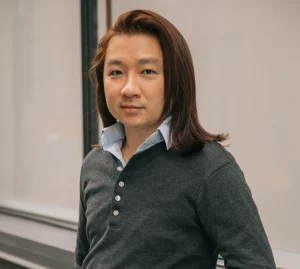
Retrospectives: An Interview with Kien Lam Posted in: News, Interviews – Tags: Retrospectives, Kien Lam

RETROSPECTIVES:
Kien Lam
In the Retrospectives interview series, readers have a chance to catch up with previous winners of the Open Competition and see the winding paths they’ve taken since receiving the award and having their books in print. How has their writing grown with time? How have their artistic persuasions and worldly perceptions shifted? Retrospectives considers the changing writerly self and the opportunities that found these poets after their big win.
What first drew you to poetry? What draws you now?
What draws me now is an overwhelming sense of guilt to write more poems after having declared myself a poet with the publication of my first book. I am kidding (mostly), but there are definitely expectations I’ve placed on myself now—which have been building up even before publishing a book—that did not exist when I first began poetry.
I play a lot of competitive video games, and being unpredictable is a key tool to have in your arsenal. This is also true in sports. And in both cases, the top players or athletes in the world are masters at this because they’ve mastered so much of the toolbox that they have lots of options available to them. But this unpredictability is also true on the other end of the spectrum for absolute beginners. They’re hard to predict because they don’t know what they are doing, and thus there are no tells, or even worse, they unintentionally mislead you. That doesn’t mean they are good or that they’ll win, but it’s a kind of rawness that can lead to inspiration.
Poetry teachers can probably see where I am going with this. Sometimes you read a young kid’s poem and they just blow you away with a line or an image here or there. These kinds of surprises still pull me into poetry. I am always delighted when a poem is able to pull me from one point on the emotional spectrum to another, and it is something I try to replicate in my own work.
The poem felt like a space of possibility for me when I began—without understanding anything, it felt like I could do anything. I still feel like that is true, but the journey feels more controlled now. This can be both good or bad, though I hope I am gravitating towards good!
In the years since you wrote your winning manuscript, have you tackled new themes or subjects you didn’t expect? Was it a matter of confidence, or finding new skills and techniques?
My work is always going to be a reflection of my experiences in the world, and so for new themes or subjects to arise would mean some sort of shift had to have taken place. I don’t think I’ve experienced any major upheavals in the few years since my book, but there are many little things that have changed me. There are major upheavals that have affected the world that make me ask myself, “Does anything I do even matter?” The answer to that is largely no in the grand scheme of things, but once you realize that “no” also does not matter, then suddenly everything matters.
How has your poetic voice grown over time? How do you support this growth: reading poetry, trying new poetic forms, embracing discomfort, etc.?
Similar to my response above, my voice will grow as I grow as person. I am always going to be dumber than my future self, so there is comfort in knowing that everything I do accumulates to a better self. Right now, I’m more focused on other genres than poetry—I’ve always viewed the poem as one medium through which I can convey a story or an emotion, but it is not the only way for me to express myself. I want to try my hands at all sorts of forms and genres as I think the nuances to each can inform and evolve each other.
Has your work responded to changes in culture or social conditions? What has that looked and felt like as a writer, in big or small ways?
I think any person paying attention to what is going on in the world should feel like their work as been affected by changes in cultural or social conditions. Someone’s house being bombed on the other side of the world might not affect your immediate day-to-day life, but it should trigger some level of empathy from you. You should feel sorrow or rage or some combination of this and more, and that is always going to be the backdrop to whatever you are writing whether it is intentional or not.
Even if you are a writer who simply thinks of literature as an escape, you cannot control how your reader approaches it, and the interaction between writer and reader is a core part of the process. Otherwise you are just writing a journal for yourself. Whatever is happening in the world is always going to influence how people to respond to art.
How have your writerly habits (e.g., a daily practice, a preferred beverage at your side, music, writing analog) transformed since starting out? Is there a habit you want to develop or continue?
I used to write better at night, but now I write better in the morning. I don’t think there’s any special reason for that other than I am getting old. I read stories about other writers who operate on strict schedules or manage to write X-amount of hours every day, and I do wish I had the discipline to replicate that. Unfortunately, part of the draw of poetry for me was that I could start and finish a piece in one sitting, and that kind of quick fulfilment spoils lazy people like me.
In winning the competition, you received $10,000 and publication. How did these things shape your life and path as a writer? Did this lead to other opportunities or a shift in your self-perception?
The money had very little effect on my life as I held a job outside of the academic space. This feels maybe insensitive to admit, but I don’t want to romanticize the idea of a poor and struggling artist. I do not think you need to live that way. And this interview space is maybe too small to dive into the complications of what is necessary or not in modern capitalism, but one thing I believe in strongly is that you should not feel guilty about what you are or are not benefiting from. Do not let big corporations trick you into sharing their burden on that front.
Publication itself was much more meaningful to me. I will always be proud of the fact that I published a book and that I managed to do it with The National Poetry Series. There’s all the usual reasons tied to being a first-generation immigrant, which IYKYK, but beyond that it is self-validating in a way that we tell people doesn’t matter, but I can’t help it if it actually does matter.
Have you written another book since the one published with The National Poetry Series? How is The National Poetry Series book similar or different?
I have individual poems that are maybe close to being a manuscript, but what’s different is that I don’t need the aforementioned self-validation anymore. I am taking more time with this one.
Who are the poets who have continued to engage you?
Until the day I die, I will tell people to read Emily Jungmin Yoon’s work. I mentioned earlier that I am drawn to work that knows how to pull people across the emotional spectrum, and Emily is a master at that very thing. Poets who can juggle the ordinary with the extraordinary serve as a lighthouse for me—as I said earlier, if nothing matters, then maybe everything matters.
If you could talk to your younger self, the version of you before you won, what would you say to yourself? What advice would you give?
I would tell myself to invest in Bitcoin. I read a joke tweet once about how someone wanted to travel back to 9/11 to fix something completely mundane, and someone else responded, “Is there anything else that happened on that day that you’d change?” and they said no.
I know this isn’t really the essence of this question, but I think everything that has happened to me has led me to this exact version of me, and I don’t really want that to change. My life is not perfect. I am not perfect. Not even close to perfect in either case, but it is my life, and I am who I am, and I feel like it’s important to not deny that.
Answer an unasked question. What’s the question, and what’s the answer?
What is something you’ve read or watched lately that has moved you?
I would like to take this chance to recommend the anime Journal with Witch, which is about 35-year-old woman who takes in her 15-year-old niece after her parents die in an accident.